The Cold Fork Files: The 2026 Afterlife of Telly Cooking Show Food
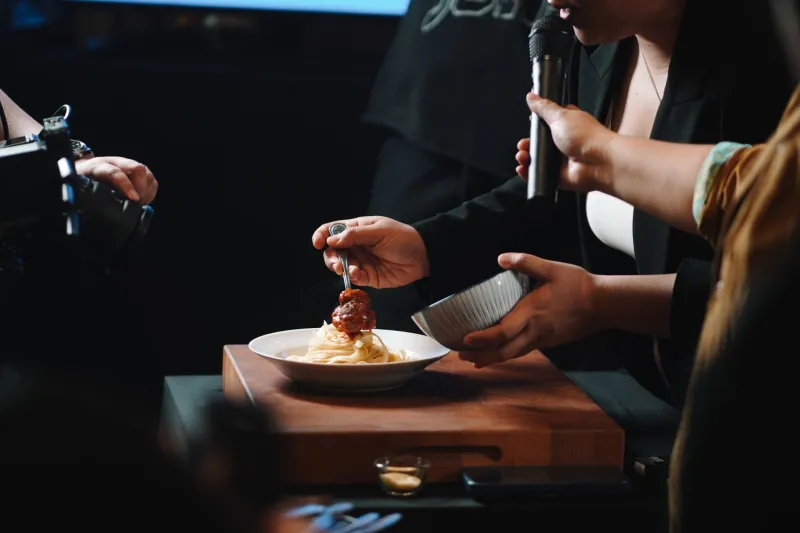
There is a moment, just after the judging, when a cooking show plate sits under the lights looking suspiciously untouched. The viewer at home sees perfection: a glossy sauce, a heroic little tower of something, a sprig of herbs placed with tweezers. Then the credits roll. And a small, hungry part of the brain asks the question that no format ever answers: where does all that food actually go?
In 2026, the honest answer is less a conspiracy and more a patchwork. Some of it is tasted, some of it is photographed, some of it is whisked away by a runner with the expression of a person who has seen too many lukewarm risottos. The fate of telly food depends on the show, the dish, the food-safety paperwork and whether anyone remembered to bring Tupperware.
The tasting table is not a buffet
A common fantasy is that once the judges have had their bite, the rest of the dish becomes a secret staff feast. In reality, the tasting table is a controlled environment, not an all-you-can-eat carvery. Judges and presenters taste small amounts. Producers may have a forkful. The rest often cools quietly under studio lights while someone checks a clipboard.
There is also the awkward matter of food safety. A dish that has been prodded, sat at room temperature and filmed from six angles is not automatically safe to hand round the crew room. Productions have to think about allergens, temperature control and traceability. A beautiful plate that has been under hot lights for forty minutes is not a community asset. It is a risk assessment with a garnish.
And some telly food is barely food at all. Hero dishes may be styled with inedible elements, undercooked for camera appeal, or built to survive a long shoot rather than a human digestive system. The 'leftovers' in that case are closer to props than lunch.
Crew lunch has its own queue
Here is the least romantic reveal: crew lunches usually come from production catering, not from the contestant who just made a deconstructed shepherd's pie. A film crew needs reliable food at reliable times. The competition dish is not a reliable meal service.
That said, there are exceptions. On some daytime food shows and smaller productions, cooked food can be shared if it has been handled properly and the production has a system for it. A presenter might have a proper taste, a producer might take a plate, and a fortunate runner might end up with the rest. But this is a favour, not a format point. The real gatekeeper is not the head judge. It is the person with the cling film and a basic understanding of the two-hour rule.
The bin, the fridge and the charity question
Food waste on set is a genuine issue, but solving it is not as simple as putting the leftovers in a box marked 'good causes'. Hot food needs to be cooled quickly, stored correctly and transported safely. Allergen information has to travel with it. A dish made for a challenge may not have the kind of traceable paperwork that a charity needs.
Some productions do work with food-waste schemes or arrange for safe surplus to be eaten by crew. Others simply do not have the infrastructure. The result is a quiet split between the fridge, the bin and the staff room. It is not a scandal. It is logistics in a novelty apron.
What this means for your own leftovers
Watching all this, the home cook can learn a few useful fridge lessons without turning into a food-safety inspector with a clipboard.
First, cool leftovers quickly and get them into the fridge rather than leaving them on the counter for dramatic effect. Second, label things. A mystery tub in the fridge is just a postponed argument. Third, reheat properly and only once. Fourth, trust your nose, but do not rely on it as a scientific instrument. And fifth, stop comparing your Tuesday tea to a telly plate. The telly plate has a food stylist, a continuity person and no intention of being eaten forty minutes later.
The real afterlife
So where does all that 2026 telly food go? Mostly to the same unglamorous places as everyone else's: a tasting fork, a crew-room table, a fridge shelf, a bin bag or, occasionally, a very lucky member of staff who happened to be standing in the right place when the cling film came out.
At Hunger TV Shop, we watch with a fork in one hand and a fridge thermometer in the other. The truth is that the most dramatic thing about telly food is not its journey to the plate. It is the quiet army of labels, temperature checks and foil trays that decide whether it gets a second act at all.